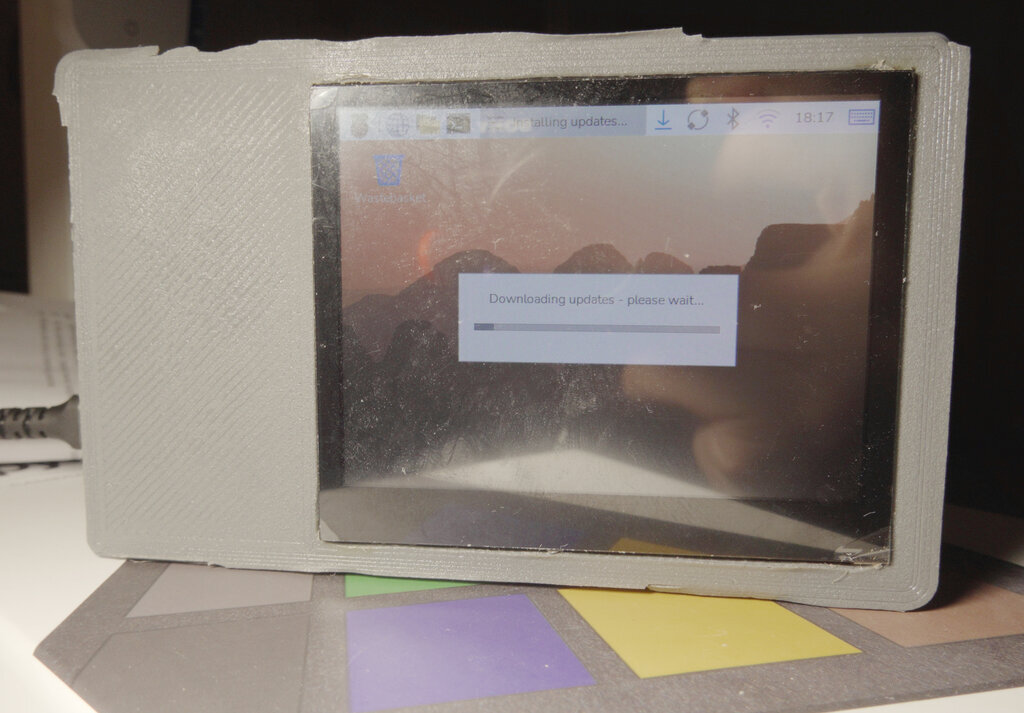
Building a Portable Visible Light Spectrometer with Raspberry Pi and Fiber Optics
Feb 21, 2026 · 17 min read · Spectrometer Raspberry Pi OV9281 Spectroscopy Color Science Fiber Optics TOSLINK Golang OpenCV 3D Printing ·
After successfully reverse engineering the CR30 colorimeter, I found myself wanting something more versatile - a device that could not only measure reflected light but also handle transmittance measurements with fiber optic coupling. The result is this compact, portable visible light spectrometer built around a …
Read MoreAdventures in Color Science: Building a DIY Calorimetric Laser Power Meter
Feb 21, 2026 · 12 min read · Laser Power Meter Calorimetry Thermistor Raman Spectroscopy IR Laser RP2040 Color Science Spectroscopy ·
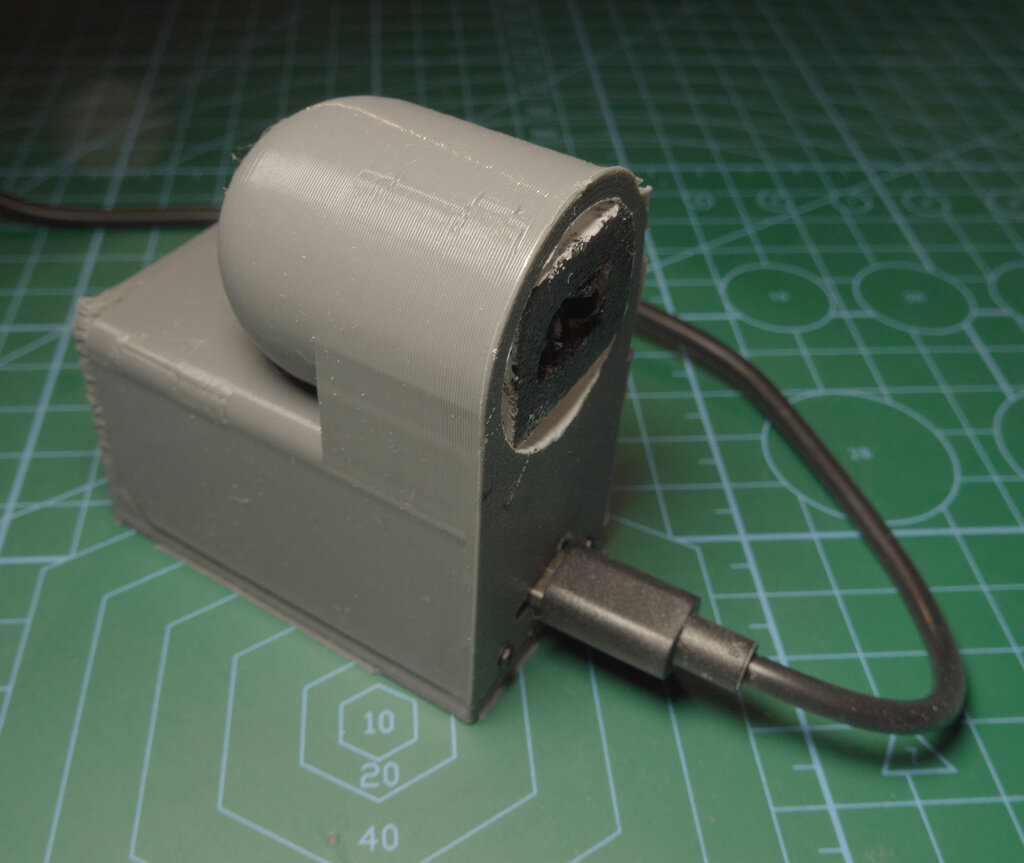
So here I am, a physicist who got bitten by the color science bug. What started as innocent curiosity about how light works has turned into a full-blown obsession with spectrometers, colorimeters, and now... laser power meters. You know how it goes - you start with one simple question and before you know it, you're …
Read MoreAdventures in Color Science: Reverse Engineering a Chinese Colorimeter CR30
Oct 19, 2025 · 17 min read · CR30 Colorimeter Reverse Engineering Color Science Python Protocol Analysis Spectral Analysis ·
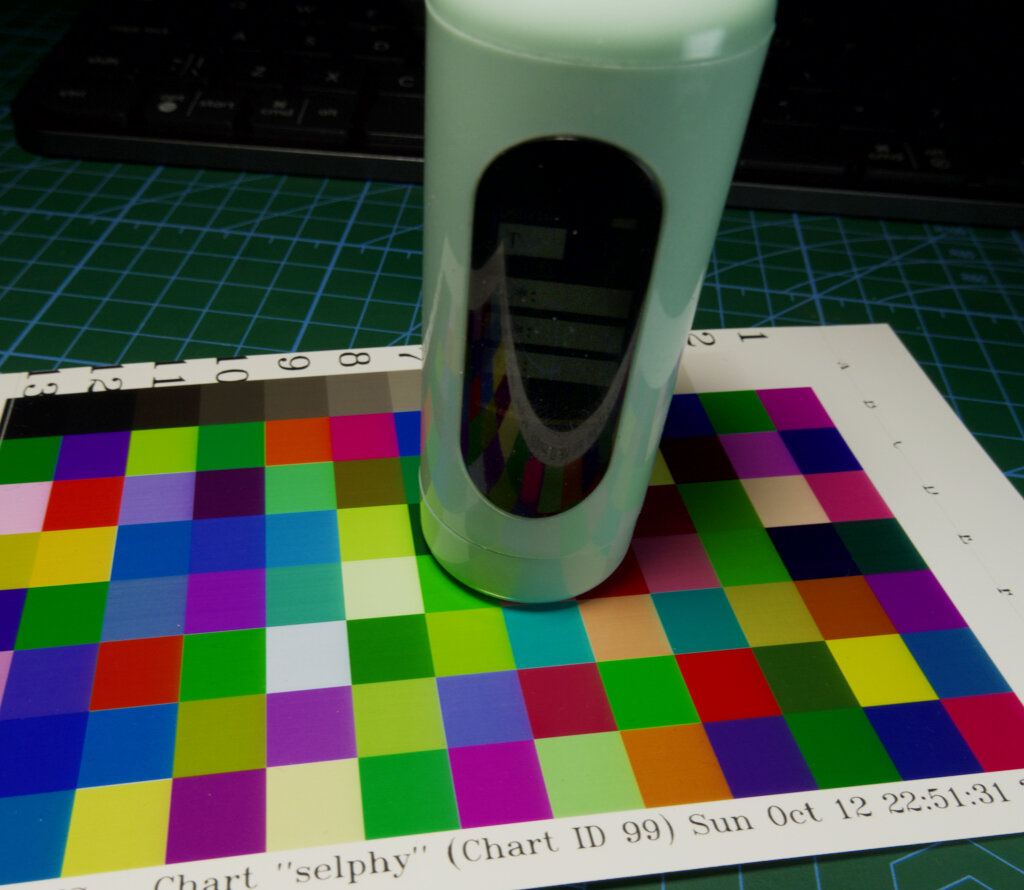
I've always been fascinated by the intersection of hardware and software, especially when it comes to understanding how devices communicate. Recently, I developed a need for monitor calibration as well as properly color correct my photos. I've been looking at X-Rite, Datacolor and other calibration devices and am on …
Read MorePerceptually uniform color space designed for measuring color differences. Overview CIE LAB (also written as CIELAB or Lab*) is designed to be perceptually uniform, meaning that equal distances in LAB space correspond to roughly equal perceived color differences. This makes it ideal for: Color difference calculations …
Read MoreDevice-independent color space based on human vision tristimulus values. Overview CIE XYZ is the foundation of colorimetry. It's based on how the human eye perceives color through three types of cone cells (L, M, S). XYZ values are device-independent and serve as an intermediate space for most color conversions. RGB to …
Read MoreQuantifying perceptual differences between colors using Delta E metrics. Overview Color difference formulas quantify how different two colors appear to the human eye. They're essential for: Quality control in manufacturing Color matching and reproduction Perceptual image processing Color tolerance specifications Delta …
Read MorePractical guides and mathematical foundations for color science, color spaces, and image processing. Tristimulus Values & Color Matching Functions Color perception is based on three types of cone cells in the human eye. The CIE defined standard color matching functions $\bar{x}(\lambda)$, $\bar{y}(\lambda)$, …
Read MoreFast lookup for color space conversion formulas and workflows. Conversion Workflow Quick Conversion Table From To Steps Key Formula sRGB LAB 1. Linearize2. RGB→XYZ3. XYZ→LAB See RGB & Gamma, CIE XYZ, CIE LAB sRGB HSV 1. Normalize2. RGB→HSV See HSV/HSL LAB sRGB 1. LAB→XYZ2. XYZ→RGB3. Gamma correct Reverse of above …
Read MoreIntuitive color representations based on Hue, Saturation, and Value/Lightness. Overview HSV (Hue, Saturation, Value) and HSL (Hue, Saturation, Lightness) are cylindrical color models designed to be more intuitive than RGB for human color selection. They're commonly used in color pickers and image editing software. Key …
Read MoreRGB Color Model The RGB color model is an additive color model in which red, green, and blue light are added together in various ways to reproduce a broad array of colors. Representation Each color component (Red, Green, Blue) is typically represented by an 8-bit integer, ranging from 0 to 255. Black: $(0, 0, 0)$ …
Read More